


Energy Prices Are Rising Again – Could Solar Help Keep Your Bills Down?
Energy prices are set to rise again this October, with Ofgem announcing a 4% increase in the energy price cap from 1 October 2026.
For a typical household paying by Direct Debit, the annualised price-cap figure will increase from £1,663 to £1,723, equivalent to around £60 more per year.
With energy costs continuing to be an important household expense, many homeowners are looking at ways to reduce how much they spend on energy.
One option is to generate more of your own electricity with solar panels.
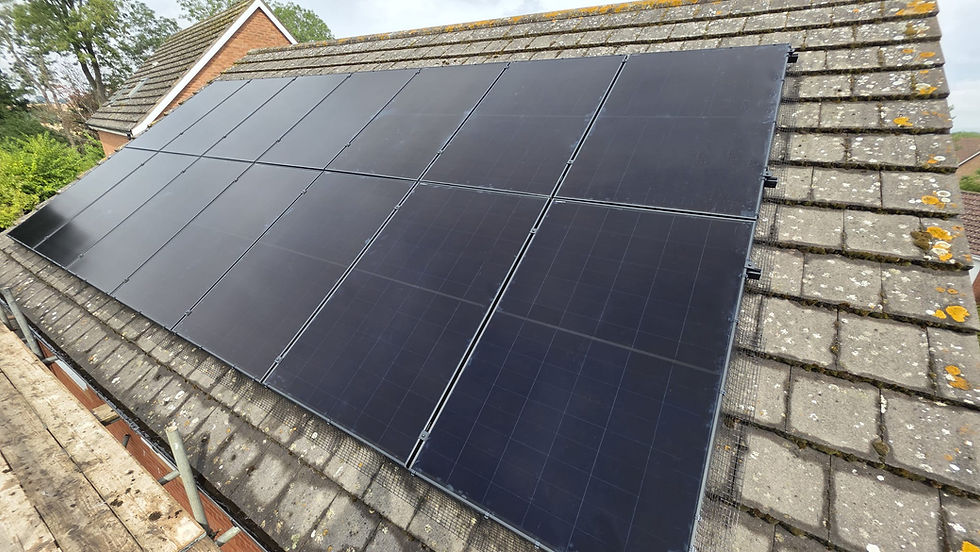
What is happening to energy prices?
Ofgem's new price cap applies from 1 October to 31 December 2026.
The cap sets the maximum unit rates and standing charges suppliers can charge customers on default tariffs. However, it isn't a cap on the total amount you can spend — your actual bill depends on how much energy you use, your tariff and other factors.
For electricity customers paying by Direct Debit, the average unit rate will be 26.32p per kWh from October.
At the same time, the Government is temporarily removing VAT from domestic electricity from 1 October 2026 until 31 March 2027, which helps offset some of the upward pressure on electricity costs.
Whatever happens to energy prices in the future, generating some of your own electricity can reduce your reliance on electricity purchased from the grid.
Generate your own electricity with solar
Solar panels generate electricity from sunlight, allowing your home to produce some of its own energy.
When your panels are generating electricity, your home can use that electricity to power appliances and other electrical devices.
This can reduce the amount of electricity you need to purchase from your energy supplier while your solar panels are producing power.
Solar electricity could be used to:
Power household appliances
Run lighting and electronics
Charge an electric vehicle
Heat water using compatible systems
Charge a home battery
What happens to the electricity you don't use?
Your solar panels won't necessarily produce exactly the amount of electricity your home needs at any given moment.
If your panels generate more electricity than your home is using, you have several options.
1. Use it
The simplest option is to use your solar electricity in your home as it is being generated.
Every unit of solar electricity you use is a unit of electricity you don't need to purchase from the grid at that moment.
2. Store it
A home battery can store surplus solar electricity for use later.
For example, your panels could generate surplus electricity during the afternoon, with your battery storing it for use during the evening when your solar panels aren't generating as much.
This can help you make greater use of your own solar generation rather than purchasing as much electricity from the grid later in the day.
3. Export it
If you've generated more electricity than your home and battery can use, you may be able to export the surplus electricity to the grid and receive payment for it.
The Government-backed Smart Export Guarantee (SEG) requires participating electricity suppliers to offer eligible small-scale generators a tariff for electricity exported to the grid. Solar PV is one of the technologies covered by the scheme.
The amount you'll receive depends on the export tariff you choose, as suppliers set their own rates and contract terms. Ofgem recommends comparing available tariffs to find one that's suitable for your circumstances.
So, rather than simply letting surplus solar electricity go unused, you could potentially:
Use it → Store it → Export it
Your solar energy can therefore provide value in several different ways.
Why add a battery?
Solar panels generate more electricity during the day, but you might use more electricity in the evening when your panels aren't producing as much.
A home battery can store surplus electricity generated by your solar panels so you can use it later.
For example:
☀️ Daytime: Your solar panels generate electricity.
🔋 Surplus: Your battery stores electricity you don't immediately need.
🌙 Evening: You can use the stored electricity instead of buying as much from the grid.
This can help you make more of the solar energy your panels generate.
And if your battery is full and you still have surplus electricity, you may be able to export it to the grid and receive payment through an eligible export tariff.
Could solar help keep your energy costs down?
You can't control what happens to wholesale energy prices or the price cap.
But you can take steps to reduce the amount of electricity you need to buy from the grid.
Solar panels can generate electricity at your property, while battery storage can help you use more of that electricity when you need it. And when you generate more electricity than you can use or store, you may be able to export it and receive payment.
That means your solar system isn't simply about generating electricity — it's about giving you more options for how you use and manage your energy.
Solar and battery storage won't eliminate your energy bills, and the potential financial benefit varies from home to home. But for many homeowners, generating, storing and potentially exporting their own electricity can be an important part of managing household energy costs.
Is solar and battery storage right for your home?
Every property is different.
Factors including your roof, shading, electricity consumption, existing energy system and electricity tariff can all affect whether solar and battery storage is suitable for you.
At Energy Store, we can help you explore your options and find a solar and battery solution designed around your home and energy usage.
Don't just pay for your energy — generate it, store it and make the most of it.
Get in touch with Energy Store today to find out how solar panels and battery storage could help you take greater control of your energy costs.


